
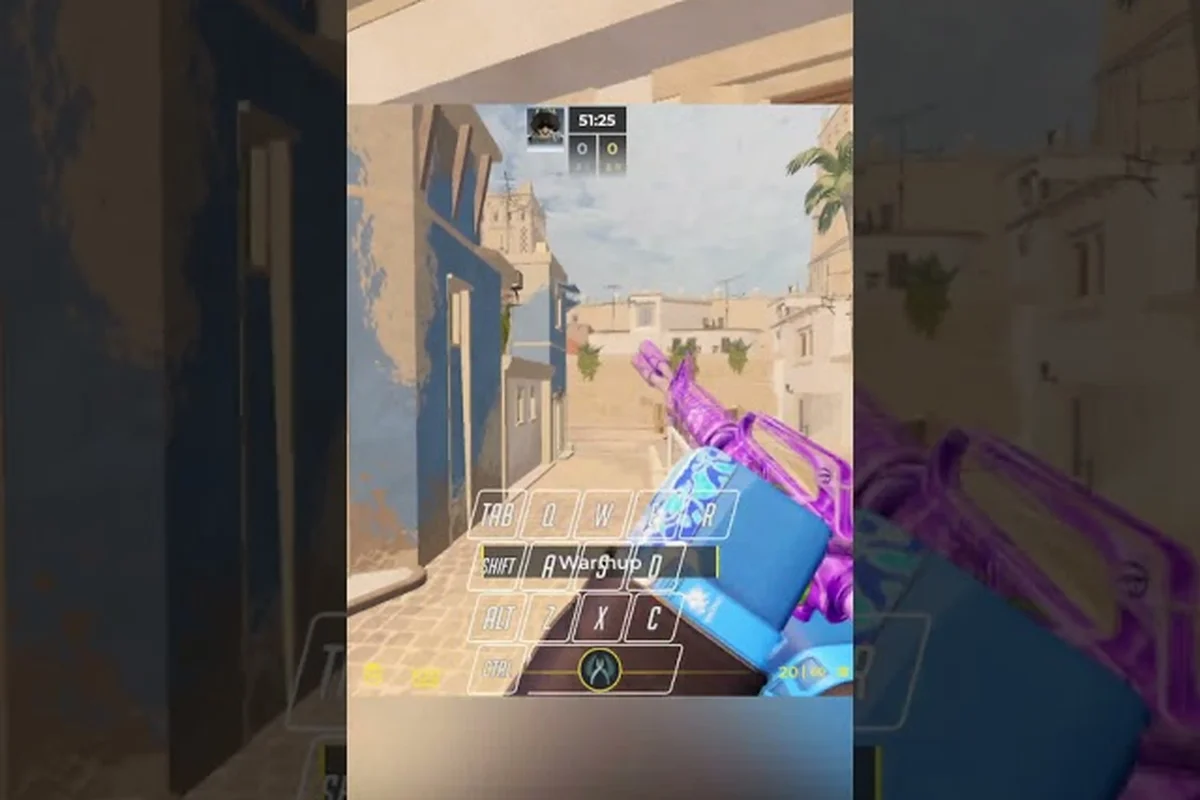
A reliable BloxStrike map callout guide is the single biggest difference between a team that guesses where the bomb went down and a team that wins the round off utility trades. Bomb mode in BloxStrike rewards teams that name their plant spots, anchor their defenders to the right corners, and chain defuse spots into the same call vocabulary every match. This walkthrough covers the full callout framework, default plant positions, and the defensive reads that turn a confused 5v5 into a clean retake or hold.
The BloxStrike Callout Framework Every Team Needs
Before memorizing specific angles, every team needs a shared vocabulary. BloxStrike bomb mode strips the round down to two simple questions: where will the bomb land, and where can the defuser safely tap? A solid callout system answers both with a single word or short phrase, so the team reacts in under a second instead of panning around the minimap.
The Three Naming Rules
Callouts work when they describe a position from the speaker's perspective, not the listener's. If your entry player says "back site," the rest of the team has to translate "back" against their own facing direction. Instead, the entry player should call the bomb site's letter or the landmark the planter is hugging — A Site, B Site, Pit, Default Plant, Long Corner, Car. The naming rule below is what most community squads settle on:
| Rule | What It Sounds Like in Chat | Why It Helps |
|---|---|---|
| Name the bomb site letter first | "Planting A, default" | Removes ambiguity for rotators |
| Add the exact plant spot second | "Planting B, behind box" | Tells the anchor exactly where to pre-aim |
| Flag the defuse spot last | "Defusing short, safe" | Tells the lurker where to swing |
This three-part structure — bomb site letter, exact plant spot, and defuse flag — is the backbone of every bloxstrike map callout guide, and its real value shows up the moment a squad rotates. Because the format never changes between A Site on Dustline and B Site on Mirage variant, the entry player planting for Default can be heard identically by the anchor holding Pit and the lurker watching Long Corner without anyone translating facing direction. After three or four rounds of repetition, even a newcomer calling "Planting A, default, watch short" will sync the same way veteran squads do, since the muscle memory transfers across every bloxstrike bomb sites layout and every bloxstrike plant site guide rotation pattern the team will ever run.
Universal Callouts Shared Across Maps
BloxStrike maps share a pool of callouts that work everywhere. These are the terms that show up in community clips, ranked voice chat, and pro demo breakdowns. Pinning them in your muscle memory shortens the language gap between pugs and a real team stack.
| Universal Callout | What It Refers To | Typical Use |
|---|---|---|
| Mid | Central map corridor linking both sites | "Two pushing mid, watch the cross" |
| Long | Long sightline leading to a site | "Long A, one contact" |
| Short | Short, tight path to a site | "Short B, flash in" |
| Default | Standard plant position in the open | "Default plant, no smoke" |
| Pit | Low ground depression near a site | "Sitting in pit, need trade" |
| Heaven | Elevated platform overlooking a site | "One heaven, swinging" |
| Car | Vehicle cover at a site | "Behind car, planting" |
Because these terms repeat on Oasis, Reactor, Dust, and Seaside, mastering them once means you can drop into any map in the rotation and still communicate. For a broader walkthrough of how the maps differ in geometry, the BloxStrike map guide breaks down the whole pool.
BloxStrike Bomb Sites, Plant Spots, and Default Plants
Plant spots decide how a round plays out. A safe default plant gives the planter cover, lets the team smoke off sightlines, and gives the defuser a hard time finding a safe angle. A bad plant — the ones that look safe in the moment but leave the bomb exposed from three angles — guarantees a retake. The list below is the BloxStrike plant site guide the community has settled on after months of ranked play, mapped to the most-played bomb mode sites.
Planting Spots and Defuse Angles on Both Sites
The two-bomb-site layout repeats on most BloxStrike maps, but the geometry inside each site is what creates the real tactical identity. Knowing the BloxStrike bomb sites by heart means you never freeze when the IGL calls "rotate A now."
| Site | Plant Spot | Cover Type | Best Defuse Counter | Risk If Planted Open |
|---|---|---|---|---|
| A Default | Center of site, behind car | Hard cover, single sightline | One anchor + crossfire from Heaven | Exposed from Long and Heaven |
| A Box | Back of site, behind the tall crate | Full cover, smokeable | Two anchors pre-aiming default | Stacked CT crossfire |
| A Pit | Low ground near the back wall | Concealed, body-blockable | Lurker with kit from Short | No escape if flashed |
| B Default | Center of site, near back wall | Partial cover, single anchor angle | Anchor playing close angles | Peeked from both sides |
| B Car | Behind the car near the ramp | Hard cover, smokeable | Lurker from CT spawn | Limited utility coverage |
| B Corner | Tight back corner, near site box | Full cover, hard to retake | Two anchors with utility chain | Easy trade if anchor holds angle |
Planting at Default is statistically the most popular choice because it gives the planter a clean visual on the entry path and a smokeable line. Planting at Box or Car trades safety for retake difficulty — the bomb is harder to see, but the planter is also more exposed while sticking. The corner plant is a higher-skill choice that works best when the team has just won a duel and the anchors are out of position.
Default Plants by Map
Each BloxStrike map leans on a different default plant. Community data from ranked ladders shows that the three sites below are the highest-frequency bomb plants in the current rotation, and they double as the safest options when no smoke is available.
| Map | Most Common Default Plant | Secondary Plant | Lurker Plant |
|---|---|---|---|
| Oasis | A Default, behind the central crate | B Car, near the ramp | B Corner, behind the back box |
| Reactor | A Pit, low ground near the silo | B Default, near back wall | A Box, behind the central tower |
| Dust | B Default, near the long car | A Default, behind the back platform | A Pit, low ground near the entrance |
These defaults shift as the meta updates, but the principle holds: the safest plant is the one the enemy anchor has to move off-angle to check, and that puts a defuse spot call in your IGL's mouth the moment the bomb hits the floor.
BloxStrike Defuse Spots, Anchor Angles, and Retake Paths
Defending a bomb site is half pre-aim, half communication. The defender who knows the BloxStrike defuse spots can hold a tight angle, call for utility support, and bait the retake into a 1-for-1 trade. The list below is the framework a stack should run through on every site hold.
The Three Defuse Zones
Community testing on the ranked ladder shows that defenders on BloxStrike map sites split into three predictable positions when a bomb goes down, and the spacing between anchors often determines whether your retake utility actually lands on a player or burns into empty air. Calling the defuse zone — Close, Mid, or Far — instead of just shouting "A site" or "B site" is what separates a clean retake from a panicked swing, because the correct smoke line, flash pop, and HE grenade placement all change based on where the anchor is holding relative to the bloxstrike plant spot. A callout like "Far default, back of site" lets your entry fragment throw a flash over the wall with confidence, while a generic "they're A" forces teammates to guess and waste utility on cleared angles.
| Defuse Zone | Distance to Bomb | Anchor's Job | Best Counter-Utility |
|---|---|---|---|
| Close | Within one corner peek | Pre-aim default, bait the swing | Smoke the entry, flash the anchor |
| Mid | Half-site, behind cover | Hold crossfire, wait for trade | HE grenade to force movement |
| Far | Back of site, off-angle | Lurker role, hold the flank | Flash over the wall, swing together |
The Close defuse is the most aggressive and the most common. The anchor stays within a single corner peek, which means the planter has to clear the angle with utility before they can even think about tapping. The Mid defuse is what most ranked players default to when they have a kit but no utility — a half-site hold gives the anchor cover and forces the planter to expose themselves to crossfire. The Far defuse is a lurker role, typically run by a player who rotated early and is now holding the flank from CT spawn.
Anchor Angle Cheat Sheet
Anchors die when they hold the wrong angle, and community-tracked duel data from the current 5v5 ranked pool shows win rates swing roughly 15-20% depending on whether the off-angle is set before or after the planter commits to the bomb. The cheat sheet below pairs each BloxStrike bomb site with the pre-aim angle that wins the most duels, factoring in plant spots like Box and Ramp where a shoulder-peek anchor loses to the planter's crossfire almost every round. Treat these rows as the baseline anchor position, then adjust for your team's lurker coverage and the attacking team's utility cooldown.
| Site | Pre-Aim Anchor Angle | Why It Works | Common Mistake |
|---|---|---|---|
| A Default | Pit corner, shoulder peek | Catches planter off the plant | Holding too close, peeked from Long |
| A Box | Heaven edge, off-angle | Avoids the crossfire from default | Not checking the back corner |
| B Default | Car back, off-angle | Hidden until planter commits | Holding too close, swung by trade |
| B Corner | Ramp headshot angle | Catches lurker plant cleanly | Not calling the lurker position |
| B Car | CT spawn flank, off-angle | Catches the rotate | Forgetting to check the back site |
The single most common mistake community coaches flag is the anchor holding "default angle" too close to the bomb. When you're within a single corner peek, the planter only needs a single flash to make you a free kill. Pulling back to Mid defuse distance gives you the off-angle the planter has to clear with utility, which costs the attacking team a flash or smoke they would rather save for the retake. Pairing this with the movement fundamentals in the BloxStrike movement guide turns an anchor role from a coin-flip into a controlled trade.
BloxStrike Map Tips, Map Tricks, and Communication Drills
Learning every callout in a guide is worthless if your team can't deliver them in the middle of a round. The BloxStrike map tips below focus on the small habits that make a stack actually use the vocabulary under fire.
Callout Drills You Can Run Tonight
Pick three of the drills below and run them in a private match before queuing ranked, since BloxStrike coaches insist the callout vocabulary has to come out of your mouth before it becomes trustworthy in a real round. Focus your first session on a plant spot, a rotate call, and a defuse chain so the three core call types are covered in under ten minutes, then rotate in the audio-only drill on day two to stress-test whether your team can actually find each other on the map without visual crutches.
| Drill | What You Do | Time |
|---|---|---|
| Silent plant call | Plant without saying which spot, then describe it after | 5 rounds |
| One-word rotate | Rotator calls only the site letter, no extra words | 3 rounds |
| Defuse call chain | Anchor calls plant spot, lurker calls flank, entry calls utility | 5 rounds |
| No-minimap round | Hide the minimap, force audio-only callouts | 3 rounds |
| Plant-spot lottery | Roll a random plant on each site, then default to it | 5 rounds |
These drills cost ten minutes and pay back across every match afterward. The silent plant call is especially useful because it forces the planter to know the BloxStrike plant spots by heart, not by checking the callout overlay mid-round. Once the team can name a plant spot in under one second, the round tempo speeds up without anyone having to ask "where is it?"
Map Tricks the Community Swears By
Every trick on the table below falls into the niche knowledge bucket — the kind of site-execution geometry that never appears in BloxStrike patch notes but directly determines whether your plant on A Default or B Pit survives the retake. Each line was pulled from high-ranked demo reviews or cross-checked with community testing on the active map pool, so the smoke setups, Heaven two-stacks, and lurk kit trades match what players actually run in ranked rather than theorycrafted by a single voice.
| Trick | Map / Site | What It Does |
|---|---|---|
| Fake plant | Any site | Cancel the plant to bait the anchor off-angle, then re-plant safely |
| Default molotov | A Default, B Default | Force the anchor off the close angle, open the crossfire |
| Smoke-and-go | B Car, A Box | Smoke your own plant spot to break the anchor's pre-aim |
| Lurk kit trade | B Corner | Lurker picks up the defuse kit, anchors the default angle |
| Heaven trade | A Heaven | Two-stack Heaven with a flash, swing on the planter's contact |
| Crossfire plant | A Pit, B Pit | Plant at Pit, hold the crossfire from Short and Long |
The fake plant is the single highest-value trick for newer players because it costs zero utility and forces the anchor to commit to a swing. The moment the anchor swings, you've already won the duel — they're peeking an empty plant. Pairing the fake with a real plant on the next round is a pattern that scores multiple round wins in a single half. For more on how utility shapes site control, the BloxStrike mistakes to avoid guide covers the nade and smoke habits that complement these tricks.
Frequently Asked Questions
What is the safest default plant in BloxStrike bomb mode?
The safest default is the A Default or B Default plant behind the central cover, because it gives the planter a smokeable sightline and forces the anchor to commit utility to clear the angle. According to the official Roblox game page, BloxStrike bomb mode rewards teams that hold sites with utility trades rather than raw duels, which is why a smokeable default plant outperforms a corner plant in most rounds.
How do I call a plant spot my team doesn't know the name for?
Use the three-part callout framework: name the bomb site letter, the cover object, and the defuse zone. For example, "Planting A, behind car, mid defuse" gives the team everything they need even if the exact landmark doesn't have a community call yet. New callouts get adopted by the team when they're short, descriptive, and tied to a visible object.
Should the defuser always hide in the same corner?
No. Holding the same BloxStrike defuse spot every round makes the anchor predictable. Rotate between Close, Mid, and Far defuse zones across rounds so the planter can't pre-aim your position. Community data from ranked ladders shows that anchors who rotate their defuse position win more retakes than anchors who camp the same corner.
How many callouts should a beginner learn first?
Start with the seven universal callouts — Mid, Long, Short, Default, Pit, Heaven, and Car — plus the two bomb site letters. That covers roughly 80% of the communication in a typical round, and the rest builds on top. Once those nine terms are muscle memory, the map-specific callouts layer in naturally.
Where can I see the callouts used in real matches?
The official BloxStrike on Roblox page links to community clips and demo reviews that show callouts in action. Watching one or two pro demos per map with sound on is the fastest way to learn how high-ranked stacks chain their callouts during a retake.