
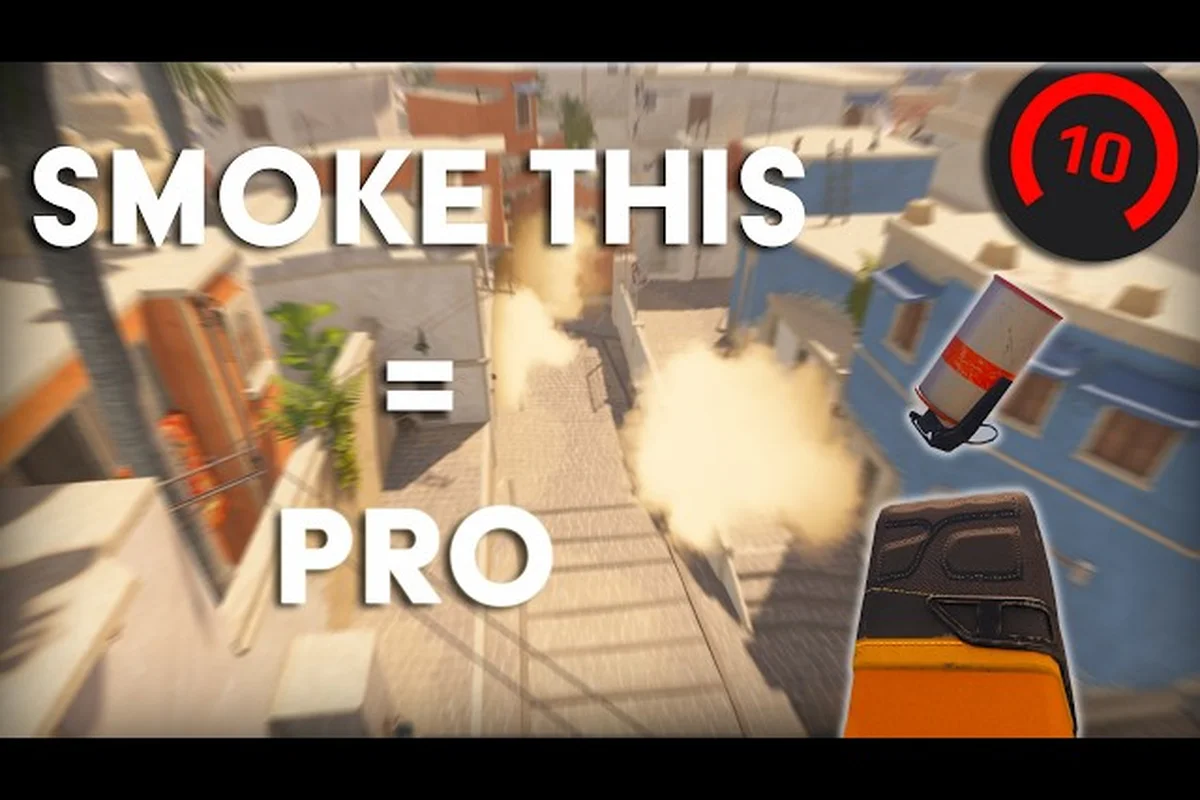
A solid BloxStrike callouts guide does more than name rooms — it teaches you the language your team will actually use to win rounds. Callouts, smoke and grenade lineups, and XP farming routes all stack together: when you know what to call, where to throw, and which actions hand out the most experience, you stop wasting minutes and start climbing the ladder. This guide walks through the named locations on every active map, the utility lineups that hold chokepoints, and the fastest leveling loops you can run between ranked sessions.
Why Callouts Matter in Competitive BloxStrike
Callouts are the shared vocabulary that turns five solo players into a coordinated unit. Without them, a teammate who spots an enemy at "the metal thing near the back" forces everyone else to swing their camera and figure out where the back even is. With them, a single word — "Heaven" or "Connector" — tells the team exactly which angle to pre-aim, which smoke to throw, and which rotation to consider. The result is fewer free deaths, faster mid control, and a much better match rating across the board.
Beyond communication, callouts feed directly into your economy. BloxStrike awards bonus round cash for objectives, multi-kills, and clutch plays, and most of those events only happen when your team reads the map in unison. A player who calls "two pushing B long" before a peek gives the AWPer a chance to set up a crossfire, which converts into a double kill and the team-wide cash bonus that lets everyone buy rifles next round. According to the official BloxStrike Roblox page, the 5v5 tactical loop is built around round cash and buy-phase decisions, so the team that talks together tends to be the team that always has rifle money.
Players in the r/bloxstrike community consistently point out that callout fluency is one of the strongest predictors of climbing out of low ranks, even more than raw aim. The reason is simple: BloxStrike rounds are short, the buy phase is tight, and a single missed rotation can snowball three rounds in a row. When you know the names, you react faster, and faster reactions equal more round wins, which equals more XP and more credits to spend on cases and skins.
| Callout Category | Typical Examples | What It Tells Your Team |
|---|---|---|
| Site Names | A, B, C, Mid | Where the objective lives and where to plant or stack |
| Elevation | Heaven, Hell, Upper, Lower, Ramp | Vertical layer of the map and which angle to clear first |
| Chokepoints | Long, Short, Connector, Funnel, Doors | A narrow lane where utility shines and trades decide rounds |
| Cover Objects | Box, Pillar, Truck, Barrel, Crate | A specific piece of geometry used for jiggle peeks and off-angles |
| Callout Type | Information Value | Risk If You Skip It |
| Site Names | High | Lost plants, missed rotates, and 4v1 retakes |
| Elevation | High | Free headshots from unexpected angles |
| Chokepoints | Very High | Wasted utility, lost gunfights, and bad trades |
| Cover Objects | Medium | Solo players get away with vague calls; teams fall apart |
A quick practice drill: queue into an unranked match and force yourself to call every single enemy location using the table above. After three or four rounds, the names will start coming out of your mouth automatically, and you will notice your team's win rate climbing.
Core Map Callouts Every Player Should Memorize
BloxStrike's active map pool rotates, but four maps show up constantly: Oasis, Reactor, Seaside, and Dust. Each one has a similar philosophy — two bomb sites, a contested mid, and a handful of named chokepoints — but the callouts differ enough that muscle memory from one map can hurt you on another. Treat the names below as the foundation you build on, and pick up map-specific jargon from the in-game ping wheel and community shorthand as you go.
Oasis Callouts
Oasis is the most beginner-friendly map because the lanes are wide and the sites are clearly separated. The A site has "A Long," "A Short," and "A Ramp," while B site centers around "B Tunnels," "B Market," and "B Huts." Mid is the real battleground: "Mid Doors," "Mid Top," and "Window Room" are the angles both teams fight over. If you only memorize one map, learn Oasis first, because its callouts are the closest thing the community has to a universal dialect.
Reactor Callouts
Reactor is the industrial map with the catwalk system. The big callouts are "Catwalk," "Silo," "Control Room," "Yard," and "Hell" (the lower level beneath the main floor). The plant spots are small, so "Default Plant," "Back Plant," and "Open Plant" matter more here than on any other map. Reactor is also where off-angle callouts like "Pipes," "Forklift," and "Red Barrel" become serious duels. For a deeper walkthrough of every Reactor angle, the BloxStrike Reactor guide covers the rotation timers and the choke points you should be pre-aiming.
Seaside Callouts
Seaside brings the harbor vibe with "Docks," "Bridge," "Container," "Upper Deck," and "Lower Deck." The A site is open and rewards rifle aim, while B site is a tight cluster of buildings where shotguns and SMGs shine. Callouts like "Arch," "Hallway," and "Storage" let you describe exact positions without taking your hand off the keyboard. A solid Seaside callout rotation will win you rounds before the spray transfer even starts.
Dust Callouts
Dust is the classic CS-style layout with "Long Doors," "Short," "Mid Gates," "B Tunnels," and "A Site Ramp." The map rewards good crosshair placement and fast rotates, and the callouts here are the ones most veteran players will use even on other maps. If you want one map where the names are universal, Dust is the one to drill.
| Map | Site A Callouts | Site B Callouts | Mid Callouts | Signature Chokepoint |
|---|---|---|---|---|
| Oasis | A Long, A Short, A Ramp | B Tunnels, B Market, B Huts | Mid Doors, Window Room | Window Room to B |
| Reactor | A Catwalk, A Silo | B Yard, B Hell | Control Room, Catwalk | Catwalk to Hell |
| Seaside | Upper Deck, Bridge | Lower Deck, Storage | Docks, Hallway | Bridge to Docks |
| Dust | A Ramp, A Long | B Tunnels, B Site Box | Mid Gates, Short | Long Doors |
For a full breakdown of every map, the BloxStrike map guide is a great companion once you have the basics down. It covers the map rotation schedule and which maps favor snipers, riflers, or SMG-heavy lineups.
Smoke, Nade, and Flash Lineups That Win Rounds
Utility is the second language of competitive BloxStrike. A well-timed smoke blocks a chokepoint and forces the enemy team to either push blind or take a long rotate, both of which buy your team time to plant, defuse, or set up a crossfire. HE grenades and molotovs clear common off-angles, and flashes pop enemy players out of pre-aimed positions so your entry fraggers can swing without eating a headshot. The lineups below are the ones most players agree on, and they are a great starting point for your own experiments.
Smokes for Map Control
Smokes are best used to deny information, not to "look cool." A smoke that blocks an enemy's most-watched angle gives your team a free rotate, which is far more valuable than blocking a lane nobody is actually holding. The classic lineups below are simple, repeatable, and work on every patch.
| Map | Smoke Target | Setup Position | What It Denies |
|---|---|---|---|
| Oasis | A Long Cross | T Spawn, left of the doorway | AWPer's view of Long push |
| Oasis | B Tunnels Exit | B Huts corner | Defender's fast rotate to B |
| Reactor | Catwalk to Hell | Silo doorway | Defender's lower-level peek |
| Reactor | Control Room Window | Mid Yard box | Defender's mid info pick |
| Seaside | Bridge | Docks by the barrels | Rotates between A and B |
| Seaside | Container Stack | Upper Deck corner | Defender's default A plant |
| Dust | Long Doors | T Ramp | AWPer's hold on Long |
| Dust | Mid Gates | T Spawn mid wall | Defender's mid presence |
HE Grenade and Molotov Spots
HE grenades work best on clustered off-angles where you suspect the enemy is hiding — think "Pipes" on Reactor, "Storage" on Seaside, or "Back Site" on Dust. A well-aimed HE forces the enemy out of cover or eats 30–40 damage, which converts a "they might be there" peek into a guaranteed kill. Molotovs do similar work for areas where enemies stand still, like the back of a bombsite during a plant.
| Map | HE Target | Where to Stand | Why It Works |
|---|---|---|---|
| Oasis | Window Room | T Spawn, behind the wall | Clears defender's primary off-angle |
| Oasis | B Market | B Huts doorway | Forces rotator to abandon cover |
| Reactor | Hell | Catwalk edge | Wipes defenders holding the lower level |
| Seaside | Lower Deck | Bridge corner | Clears boat-side defenders |
| Dust | B Site Box | B Tunnels entrance | Pre-aim damage on the default plant |
Flash Lineups for Pop Entries
Flashes are the cheapest, fastest utility in the game, and they should be used as part of every execute. A "pop flash" is one that detonates the moment your entry peeks, blinding anyone holding the angle. To pop flash, throw the grenade so it bounces off a wall or ceiling directly in front of the enemy's face. Most flashes work within 1–2 seconds, so time them with your entry's swing rather than his utility pull.
If you are still setting up your controls, the BloxStrike crosshair settings guide has a section on binding utility keys, which makes pop flashing much easier when you can toss a flash with your thumb without losing aim control.
XP Farming Routes to Level Up Fast
Knowing the maps is half the battle — the other half is converting matches into XP fast. BloxStrike awards XP for kills, round wins, objective plays (plants and defuses), and match completion bonuses, which means the fastest leveling routes combine a high win rate with a high activity rate. Below are the loops most players use to push from early levels into the unlock tiers without grinding 12-hour sessions.
Match-Based XP Sources
| Action | Approximate XP | Why It Matters |
|---|---|---|
| Round Win | 150–250 | Direct progress, stacks every round |
| Bomb Plant | 100–150 | T-side only, but a reliable bump |
| Bomb Defuse | 200–300 | High reward for the clutch player |
| Kill | 20–40 each | Multi-kills stack with win bonus |
| Match Completion | 300–500 | Bonus just for finishing the lobby |
| MVP | 200 extra | Stacks on top of all of the above |
The numbers above are based on community testing reported by r/bloxstrike, and they can shift slightly with each patch, but the order of magnitude has stayed consistent since the spring 2026 update. Plants and defuses are the single highest-value actions per round, which means a T-side player who plays the objective can out-XP a teammate who only chases kills.
Route 1: Competitive 5v5 Stack
The fastest way to level up is to queue ranked with a coordinated team of two or more. Voice chat (or text, if voice is off) lets you call utility lineups, set up crossfires, and win rounds at a much higher rate than solo queue. If you can sustain a 60% win rate with consistent plants and defuses, you are earning roughly 2,500–3,500 XP per match, which is the upper tier of XP per minute.
Route 2: Deathmatch Warmup Loop
Deathmatch is the best warmup, and it also pays out modest XP per kill. A 10-minute deathmatch session will net you 1,500–2,000 XP plus real aim practice, which carries over to your ranked games. The trick is to focus on crosshair placement rather than kills, and to consciously practice the angles you struggled with in your last ranked match. After three or four deathmatch sessions per day, your ranked win rate tends to climb, which in turn boosts your XP per match.
Route 3: Daily Login and Code Combo
The login bonus is small but free, and stacking it with redeem code drops from BloxStrike's official X account gives you a credit buffer that you can convert into case openings or buy-phase flexibility. Credits do not give XP directly, but they keep you in the game longer (because you can afford rifles every round), which converts into more wins, which converts into more XP. Think of codes as a meta-XP boost rather than a direct one.
Route 4: Objective-Focused Solo Queue
If you have to solo queue, the best XP strategy is to play the objective ruthlessly. As a T-side player, prioritize getting the bomb down even at the cost of a kill or two — the plant XP is worth more than a third kill in many rounds. As a CT-side player, hold for trades rather than hero peek, because surviving to a defuse attempt is a huge XP swing. Solo queueing with this discipline lands you around 2,000–2,500 XP per match, which is solid for a leveling guide without a stack.
| Route | Avg XP / Match | Skill Requirement | Best For |
|---|---|---|---|
| Ranked Stack | 2,500–3,500 | Intermediate | Fastest XP with friends |
| Deathmatch Loop | 1,500–2,000 | Beginner | Warmup + XP |
| Daily + Codes | 200–500 bonus | Any | Passive boost |
| Objective Solo Queue | 2,000–2,500 | Intermediate | Solo players |
The XP-to-Unlock Pipeline
The final piece of the puzzle is knowing what each XP milestone actually unlocks. According to community data, the early milestones (levels 2–10) give you basic weapon attachments, while the mid milestones (10–25) start dropping skin cases and trade-eligible items. The high milestones (25+) tend to hand out limited-run skins and pattern tiers, which is where the real inventory value lives. A player who treats XP farming as a long-game investment — rather than a single match grind — is the one who ends up with both a strong ranked rank and a solid skin portfolio.
If you want to round out your foundation, the how to get good at BloxStrike guide covers the settings, sensitivity, and movement habits that pair naturally with this callouts and XP material. Together, those two reads cover roughly 80% of what a new player needs to climb out of the early ranks.
Building a Practice Routine Around Callouts and XP
A good routine turns callouts from conscious effort into muscle memory. The block below is a 30-minute loop that most players can run before their first ranked session. It is structured so you spend time on every skill that feeds into XP: communication, aim, utility, and objective play.
| Block | Time | Activity | What You Build |
|---|---|---|---|
| 1 | 5 min | Deathmatch warmup | Crosshair placement and flick speed |
| 2 | 5 min | Callout drill in private match | Fluency with site and chokepoint names |
| 3 | 5 min | Smoke and flash practice | Muscle memory for utility lineups |
| 4 | 10 min | Competitive match | Putting it all together with XP gains |
| 5 | 5 min | Review the match notes | Identify the next weak callout to drill |
The first two weeks of this routine are the hardest, because your brain is actively translating map geometry into words. By week three, the callouts start coming out on their own, and the XP gains from a coordinated team start showing up in your match history. By week four, you should be holding a rank you are comfortable with, and the XP-per-match number should be trending upward as your win rate climbs.
The single most common mistake is to skip the callout drill. It feels slow and silly in a private match, but the players who skip it are the ones who freeze on comms during a real round. Treat the drill like a fundamentals block in any other competitive game: boring on its own, but the foundation of every win you will ever get.
A second common mistake is to chase kills instead of rounds. Kills are XP, but round wins are more XP, and objectives are the most XP. Even on a cold aim day, you can contribute by planting the bomb, defusing with a clutch, or trading your teammate after they bait out a utility cooldown. The XP curve rewards round outcomes, not kill counts, so play the round first and the kills will follow.
Frequently Asked Questions
What is the fastest way to memorize callouts?
Drill the same map three or four times in a row in unranked or a private match, and force yourself to call every enemy position using the table in section 2. After three or four rounds, the names will start coming out automatically, and the rest is repetition. Pair this with a short aim warmup so the callouts are not the only thing your brain is learning.
How much XP does a single competitive match give?
A typical competitive match in the 2026 patch awards somewhere between 1,800 and 3,500 XP depending on round wins, plants, defuses, and whether you finish MVP. Stacked teams that win consistently land at the top of that range, while solo queue players hover around the middle. Deathmatch sessions give less per minute but make up for it with consistent kill XP.
Which map should I learn first as a beginner?
Start with Oasis, because its lanes are wide, its sites are clearly separated, and its callouts are the closest thing the community has to a universal dialect. Once Oasis feels natural, move to Dust, then Seaside, and finally Reactor. Reactor is the hardest because of the catwalk system, but it is also the map where callout fluency pays off the most.
Do smokes and flashes give XP?
No, utility does not give direct XP, but it is the single best way to convert rounds into wins, and wins are the biggest XP source in the game. A well-placed smoke that blocks the AWPer's angle is worth far more XP than a flashy double kill that loses the round anyway. Treat utility as a meta-XP boost rather than a direct one.
Can I level up without playing ranked?
Yes, but it is slower. Unranked and deathmatch both give XP, and the daily login plus redeem code drops from the official X account stack on top of that. The honest answer is that ranked with a coordinated team is the fastest XP route, but the difference between ranked and unranked is smaller than most players think, especially if you are playing the objective on both queues.